01
Full grease path
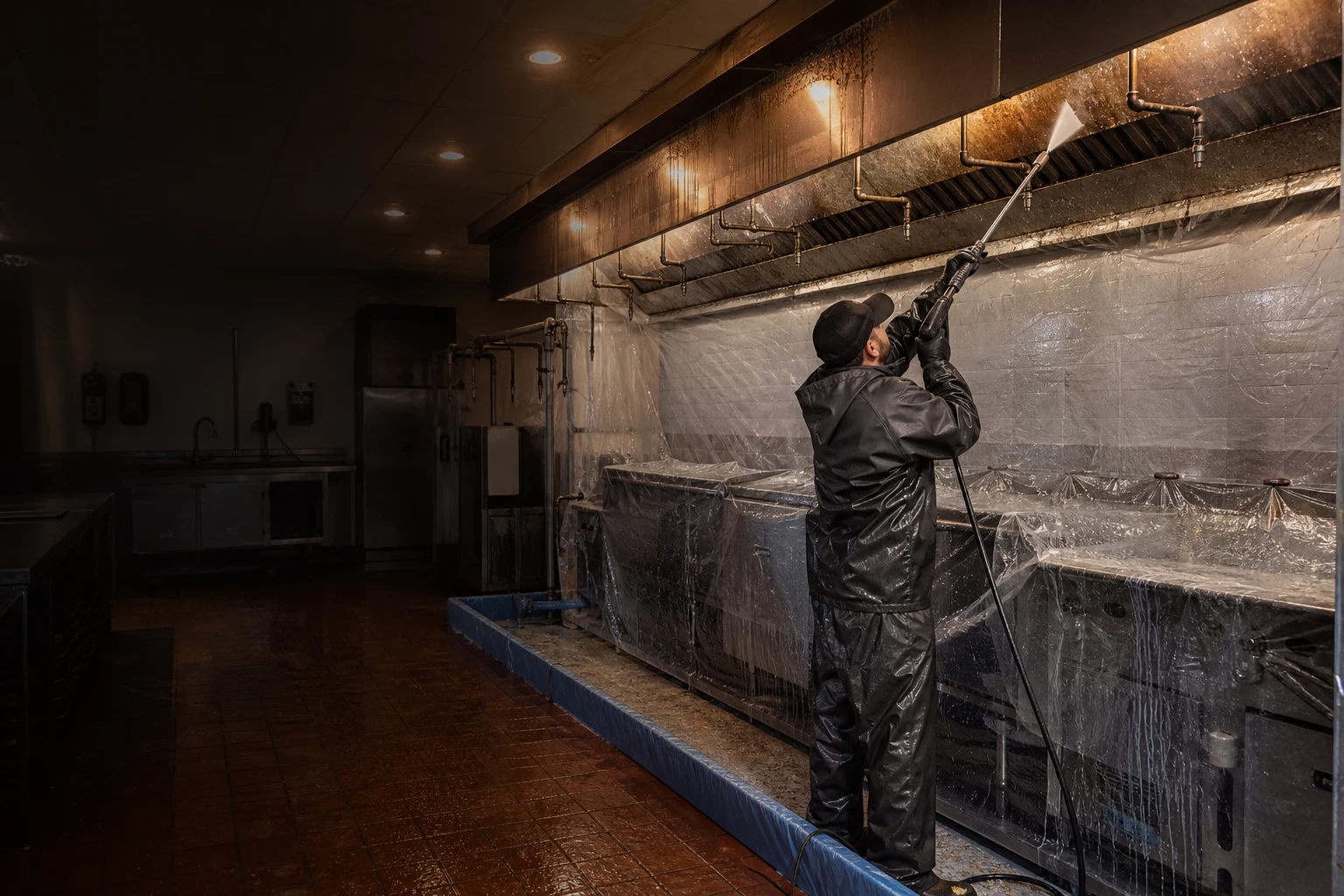
Commercial hood cleaning
Protect the cookline and clean the agreed accessible hood, plenum, duct and fan components.
Explore this service →Commercial kitchen exhaust help in Chattanooga
Request hood, accessible duct and rooftop fan cleaning with a clear system scope, shutdown plan and compliance record.
What can we help with?
Commercial exhaust services
The written scope should identify the hood, plenum, accessible duct, fan, protection, cleanup, photographs and every known limitation.
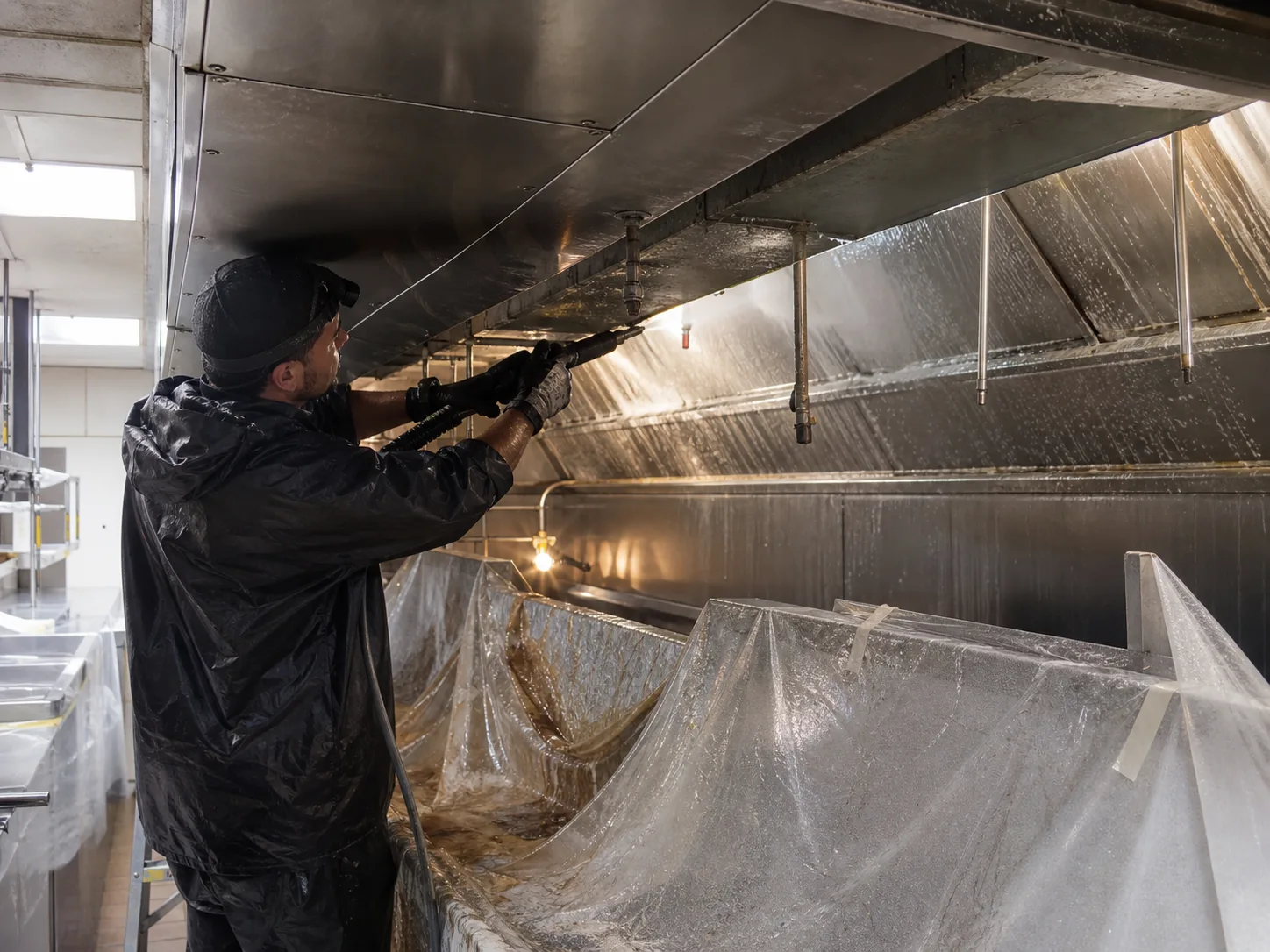
Full grease path
Protect the cookline and clean the agreed accessible hood, plenum, duct and fan components.
Explore this service →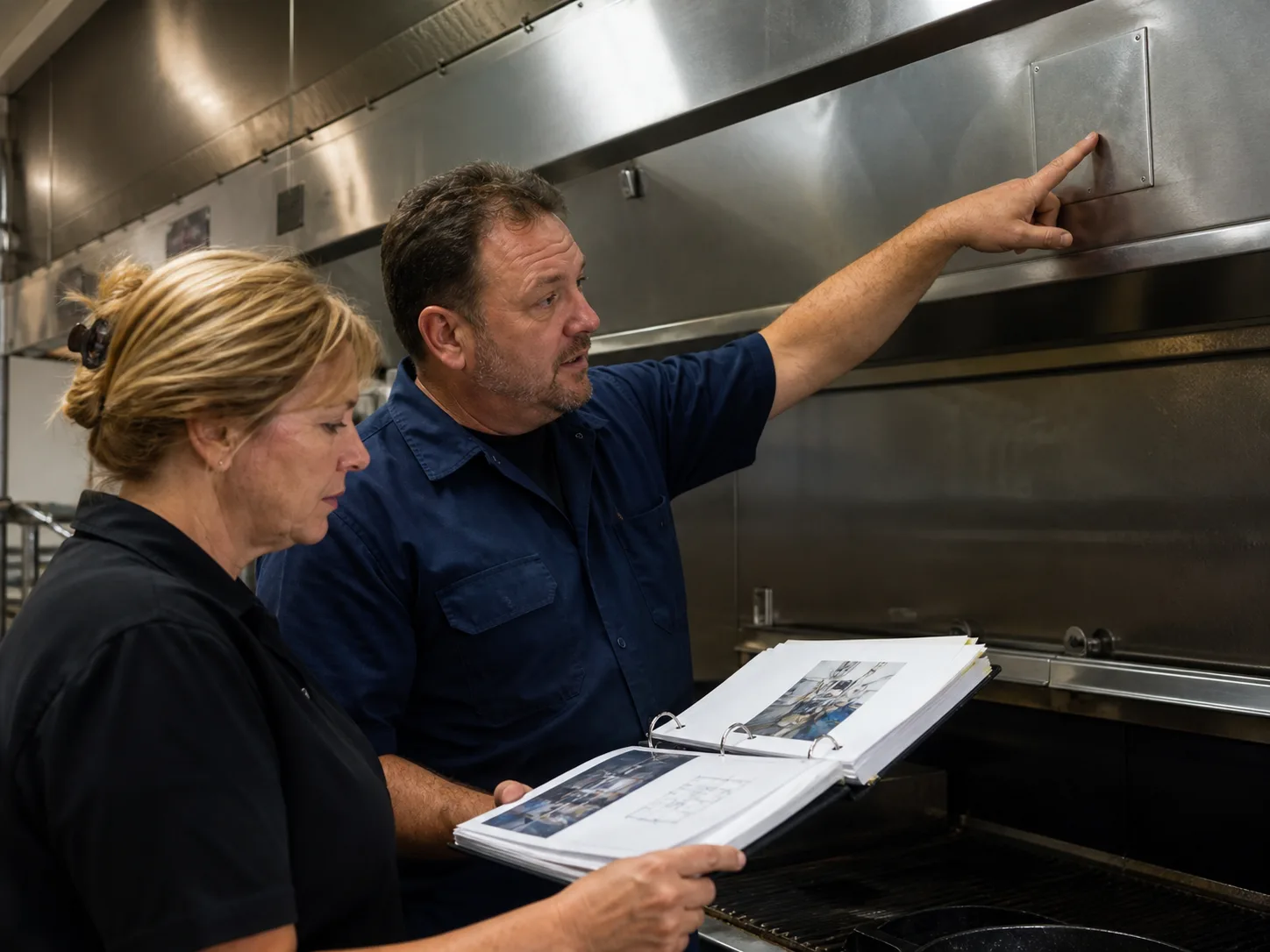
Records + condition
Connect labels, reports, photographs and open deficiencies to each system in the building.
Explore this service →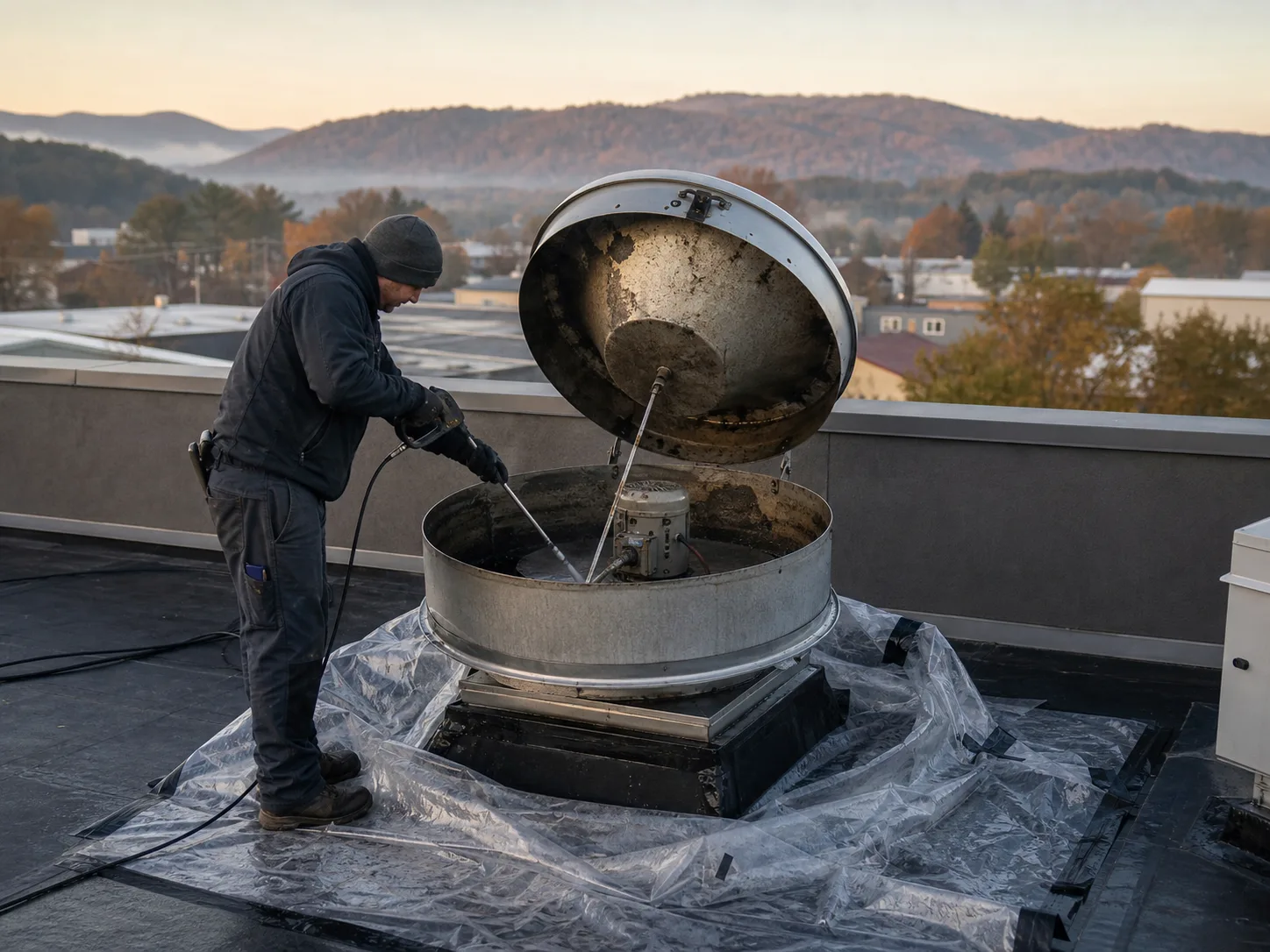
Roof protection
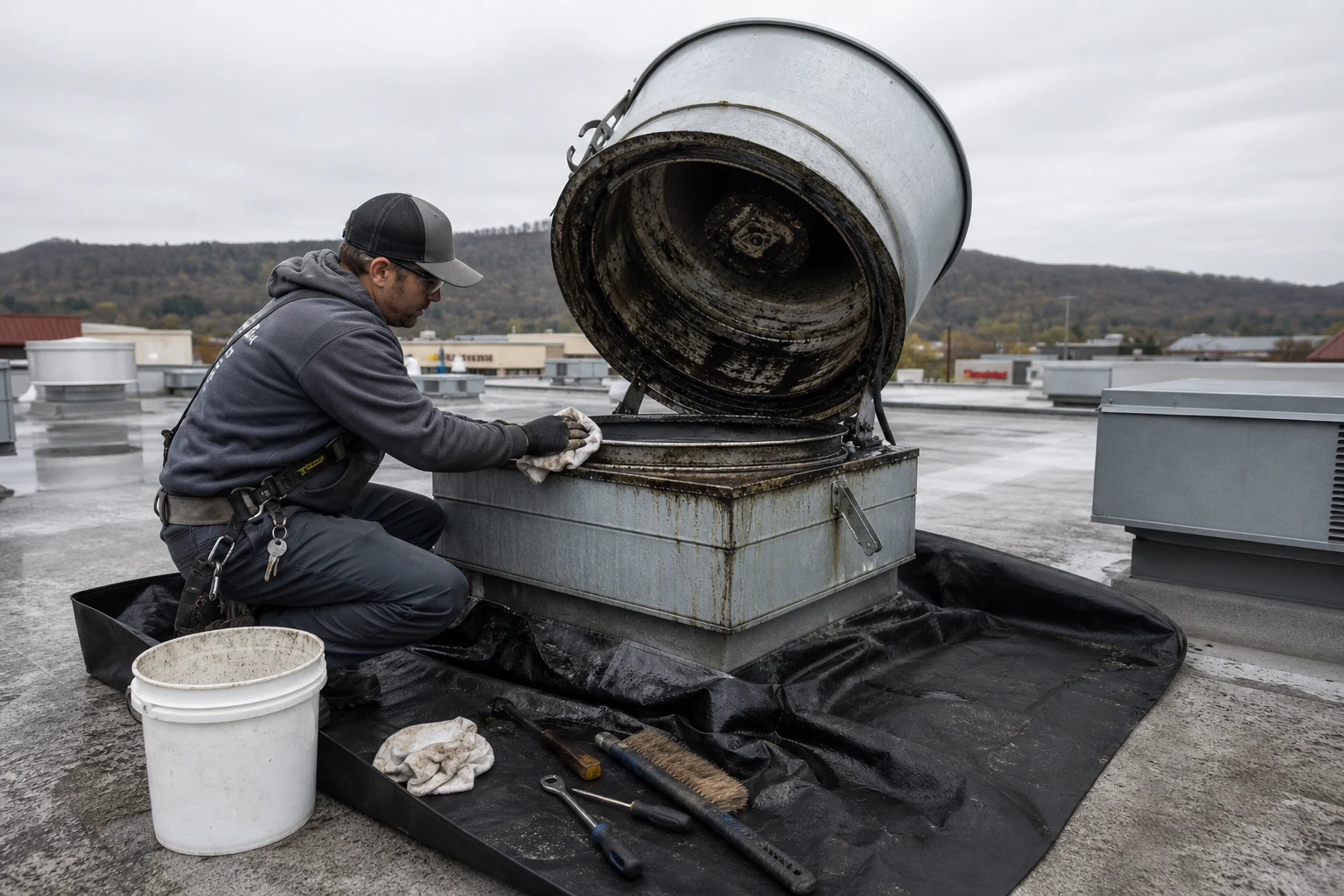
Plan safe access, fan lifting, grease containment and condition photographs before service.
Explore this service →Chattanooga fire-prevention context
Common NFPA 96 planning benchmarks range from monthly inspection for solid-fuel cooking through quarterly, semiannual and annual categories. The current adopted standard and Chattanooga fire official control the requirement for a specific facility.
Useful details before the first visit
Identify the cooking profile.Flag solid fuel, charbroiling, wok, 24-hour and high-volume operations.
Plan the building access.Share keys, alarms, roof route and reopening deadline.
Tag the photographs.Show the identifiable hood, access point, fan and surrounding roof.
Operational starting point
| What you notice | Possible approach | What still needs inspection |
|---|---|---|
| Routine recurring service | Complete hood-to-fan cleaning | Buildup, access, fan and protection |
| Unclear next due date | Operation-based schedule review | Fuel, volume and observed accumulation |
| Inspection approaching | Cleaning plus records preparation | Reports, labels and unresolved deficiencies |
| Grease at fan or roof | Rooftop fan and containment scope | Hinge, wiring, curb and roof condition |
Planning comparison only. Cleaning is separate from fire-suppression, electrical, mechanical and official inspection work.
How requests work
Useful project details make it easier for an independent provider to confirm fit, timing and the next sensible step.
Share cooking method, system count, last service and access.
Confirm shutdown, cooling, protection, keys, alarms and roof route.
Close with system-tagged photos, labels, deficiencies and a clear invoice.
Prepare the request
Frequently asked questions
Common planning categories include monthly for solid fuel, quarterly for high-volume and certain cooking operations, semiannual for moderate volume, and annual for low-volume or seasonal operations. Confirm the current requirement locally.
The exhaust fan is part of the grease path. The proposal should state fan blades, housing, duct opening and roof-containment scope explicitly.
A small accessible system may plan around $400–$750. Long or multiple ducts, heavy buildup, solid fuel and difficult access can range from $750 to $1,800+. These are not bids.
No. Keep the underlying service report, photographs and deficiency follow-up tied to the correct system.
Request commercial service
Send the system facts and preferred shutdown window. An independent provider can confirm coverage, qualifications, scope and final price.